Most people outside South India think the region’s food begins and ends with dosa and idli. It really doesn’t. South Indian traditional food is a massive, diverse category spanning four distinct states, each with its own specific techniques, ingredients, and specialties that rarely make it onto restaurant menus outside the region.
I spent three weeks traveling through Tamil Nadu, Kerala, Karnataka, and Andhra Pradesh specifically chasing regional food, and honestly, I barely scratched the surface. Every single town seemed to have its own specific dish worth trying.
Understanding the Diversity Within “South Indian” Food
Featured snippet answer: South Indian traditional food varies significantly by state — Tamil Nadu emphasizes tamarind and lentil-based dishes, Kerala uses coconut and seafood extensively, Karnataka blends multiple regional influences, and Andhra Pradesh is known for its intense, chili-forward spice levels.
Tamil Nadu Specialties
- Sambar — the tamarind-based lentil stew that anchors most Tamil meals
- Rasam — a thin, peppery soup, often served alongside sambar
- Chettinad cuisine specifically deserves its own mention — intensely spiced meat and seafood dishes using freshly ground masalas unique to the Chettinad community
- Filter coffee — not a dish exactly, but genuinely essential to the Tamil food experience
Kerala Specialties
Kerala’s coastal geography shapes its entire food culture — coconut, seafood, and rice form the backbone of most traditional dishes.
- Appam with stew — soft, fermented rice pancakes with a coconut-based vegetable or meat stew
- Kerala fish curry (meen curry) — tangy, coconut-based, often made with kudampuli (a specific sour fruit)
- Puttu — steamed rice flour cylinders, typically eaten with banana or a savory curry
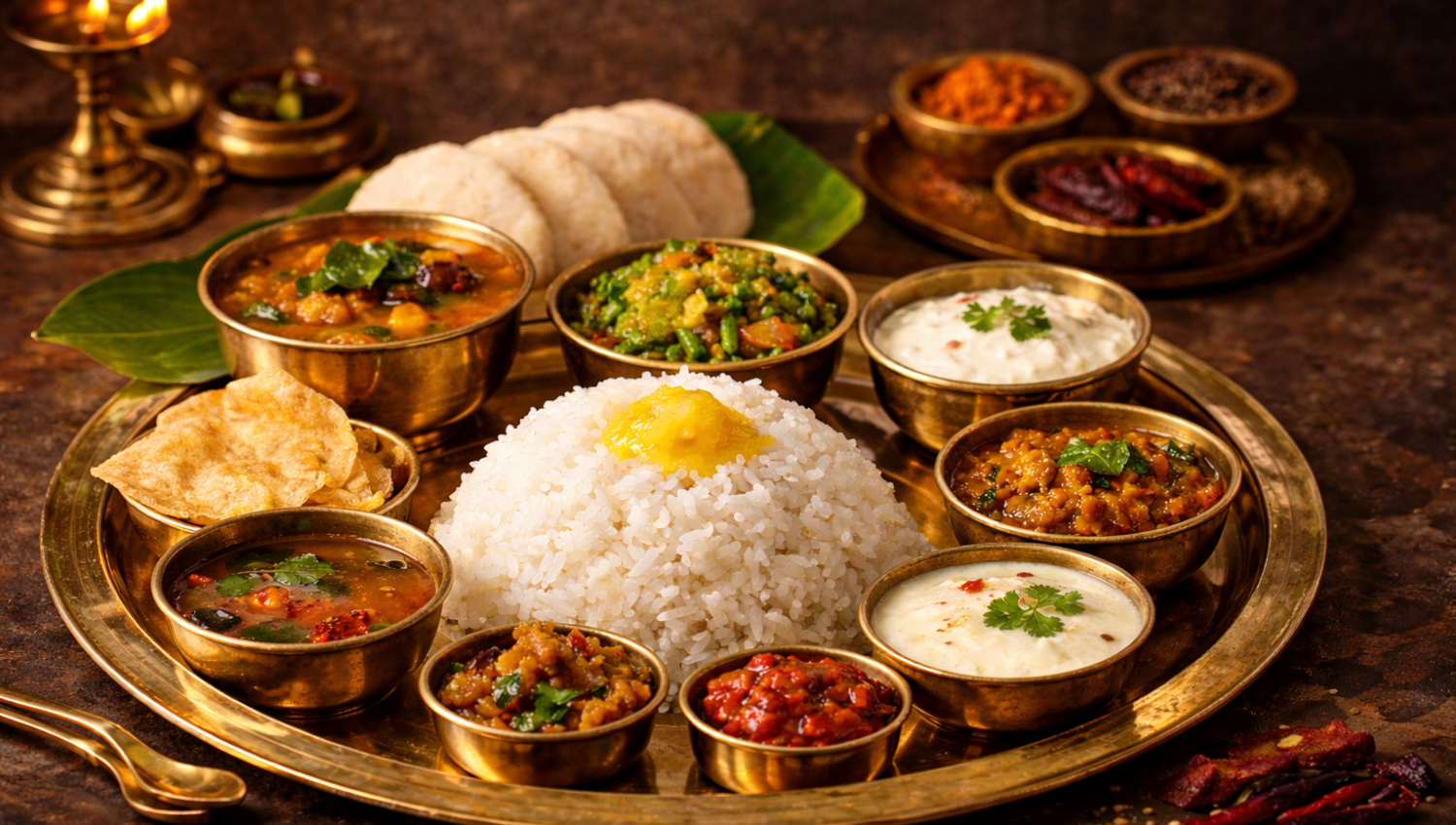
- Sadya — an elaborate vegetarian feast served on a banana leaf, traditionally for festivals like Onam
Karnataka Specialties
Karnataka’s food often gets overshadowed by its neighboring states, unfairly so.
- Bisi bele bath — a spiced rice and lentil dish, comfort food at its finest
- Mysore masala dosa — a spicier, red chutney-lined variant of the standard dosa
- Ragi mudde — finger millet balls, a rural staple that’s genuinely nutritious and increasingly trendy again
- Neer dosa — thin, delicate rice crepes, particularly common in coastal Karnataka (Mangalore/Udupi region)
[link to related guide: Must-Try Street Foods Across India: A Regional Guide here]
Andhra Pradesh and Telangana Specialties
If you like spicy food, this region delivers more heat than perhaps anywhere else in South India.
- Andhra chicken curry — intensely spiced, notably red from generous chili use
- Gongura pachadi — a tangy chutney made from sorrel leaves, distinctly regional
- Hyderabadi biryani — technically Telangana now, but globally recognized as one of India’s finest biryani styles
- Pesarattu — a green gram-based dosa, distinct from the standard rice-lentil version
Best Places to Experience Authentic South Indian Food
- Chettinad region, Tamil Nadu — for the specific Chettinad culinary tradition
- Fort Kochi, Kerala — blends traditional Kerala food with historical Portuguese and Dutch influences
- Udupi, Karnataka — the actual birthplace of the “Udupi restaurant” style now found across India
- Hyderabad, Telangana — for biryani and the broader Nizami culinary tradition
Tips for First-Time Visitors Exploring South Indian Food
- Ask about spice levels before ordering, particularly in Andhra restaurants — the heat here genuinely surprises people
- Try banana leaf meals at least once — it’s as much a cultural experience as a meal
- Don’t skip breakfast items like idli, pesarattu, or puttu just because you’re used to a different style — South Indian breakfast culture is genuinely distinct and worth exploring on its own
- Seek out small, local eateries over hotel restaurants for the most authentic versions of regional dishes
Vegetarian-Friendly by Design
South Indian cuisine, particularly in Tamil Nadu and Karnataka, has some of India’s strongest vegetarian traditions — genuinely satisfying, varied vegetarian meals that never feel like an afterthought or a compromise.
Final Thoughts
South Indian traditional food deserves far more recognition beyond the handful of dishes that made it into pan-Indian restaurant menus. If you’re traveling through the region, push yourself past dosa and idli into the deeper regional specialties — Chettinad, Andhra, Kerala’s coastal cooking — each state genuinely offers a distinct culinary identity worth exploring properly.
[link to related guide: Cultural Festivals Around the World You Must Experience here]
FAQs
Q1. What is the difference between Tamil and Kerala food? Tamil food relies more on tamarind and lentil-based dishes, while Kerala food emphasizes coconut and seafood due to its coastal geography.
Q2. Is South Indian food always vegetarian? No, though Tamil Nadu and Karnataka have strong vegetarian traditions; Kerala and Andhra Pradesh feature substantial meat and seafood dishes too.
Q3. Which South Indian state has the spiciest food? Andhra Pradesh is generally considered to have the spiciest cuisine in the region.
Q4. What should I try for an authentic South Indian breakfast? Idli, dosa, pesarattu, and puttu all represent different, genuinely authentic breakfast traditions across the region.
Q5. Is Hyderabadi biryani considered South Indian? It’s often grouped with South Indian cuisine, though technically it belongs to Telangana’s distinct Nizami culinary tradition.
Q6. What is a Sadya meal? An elaborate traditional Kerala vegetarian feast, typically served on a banana leaf during festivals like Onam.